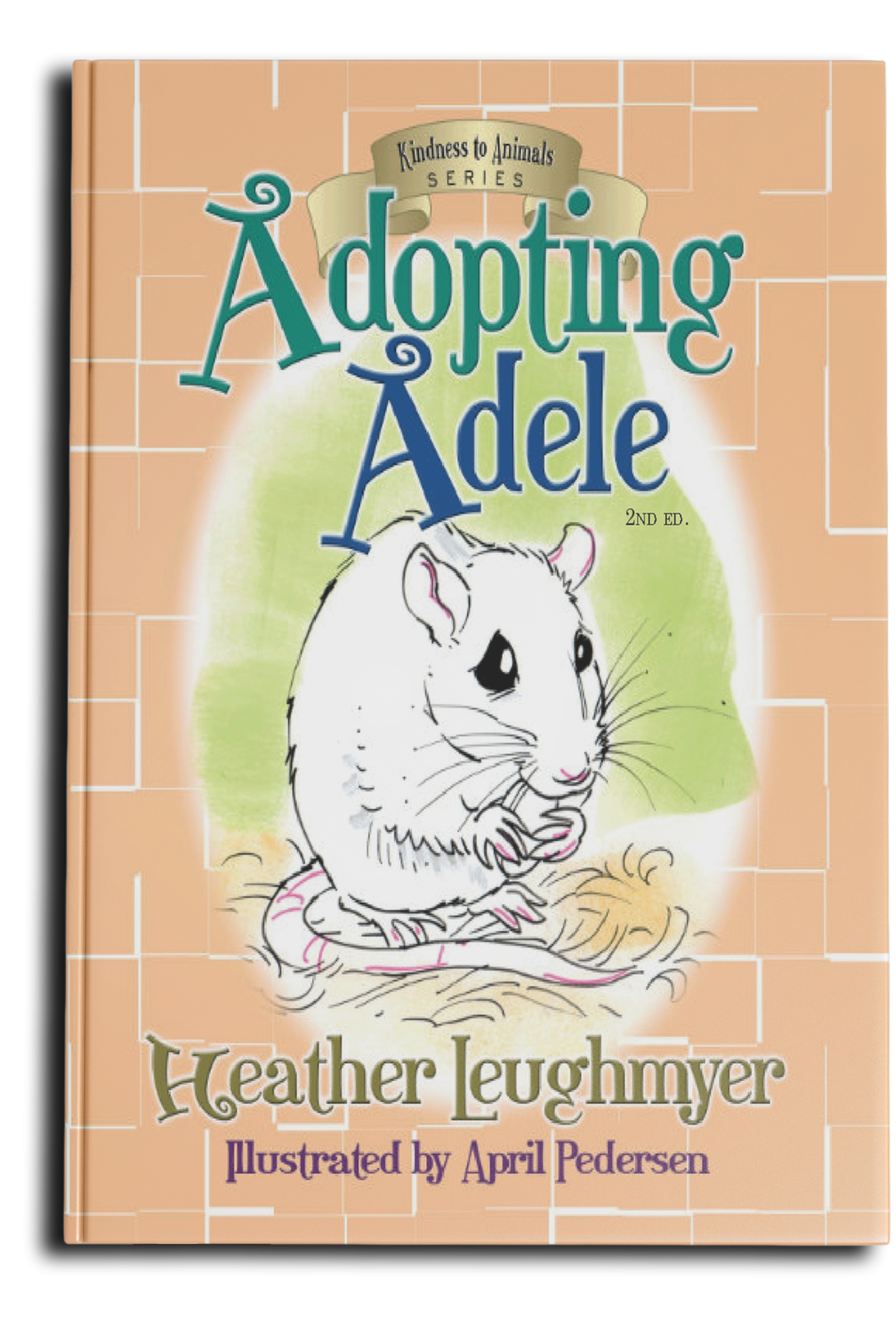
If you are looking for a heartfelt picture book that gently teaches empathy, patience, and the importance of adoption, Adopting Adele by Heather Leughmyer is a beautiful and meaningful choice. Through soft illustrations and carefully chosen words, this story helps children understand what it feels like to be overlooked and how love can change everything.
At the center of the book is Adele, a small white rat living in a glass cage at an animal shelter. From her spot behind the glass, she watches people walk by day after day. She hears kittens mewing and puppies playing as families stop, smile, and choose them. Adele is clean, gentle, and intelligent, yet she is ignored. The pictures show her waiting quietly, hoping someone will notice her and see who she truly is.
As time passes, Adele begins to lose hope. Children ask what she is, and adults respond with fear or disgust, calling her names that hurt even though she does not understand why. The illustrations emphasize her loneliness as other animals leave with new families while she remains behind. The glass cage begins to feel less like protection and more like a prison. Adele spends more time sleeping, and her bright curiosity slowly fades.
When Adele sleeps, she dreams. These dream scenes are tender and joyful, showing a world where rats are loved and welcomed. She imagines running, playing, and piling together with other rats who greet her with kisses and cuddles. The pictures of these dreams are warm and full of movement, standing in contrast to the stillness of her shelter life. Each time she wakes, the dream slips away, and she is alone again.
One day, everything changes. Adele is placed in a carrier and secured in a car. As the scenery passes by outside the window, she daydreams once more, imagining all the friends she might meet. The images show houses moving past, mile by mile, as her excitement grows. But when the car finally stops and the woman says they have arrived, Adele feels afraid. She wonders if this place will be just like before, and the fear of being unwanted returns.
Inside her new surroundings, Adele’s anxiety is clear. She shivers, twitches her nose, and backs into a corner, waiting for something bad to happen. The illustrations closely capture her physical fear as time stretches on and she barely breathes. When she hears a door unlock, her worry deepens. She expects disappointment.
Instead, Adele hears soft sounds. A scuttle, a chatter, a squeak. Curiosity slowly replaces fear. With each careful step, she moves closer to the door, gathering courage as she goes. When she finally steps outside, the pictures reveal what she sees. Seven whiskered noses waiting for her. Real rattie friends at last.
This moment is the emotional heart of the book. Adele is welcomed immediately. Each rat greets her, grooms her, and kisses her face. The illustrations are full of warmth, touch, and connection. Yesterday she had no friends. Today she has seven. For the first time, Adele belongs.
The story ends with peace and contentment. Adele no longer needs dreams of rattie piles because she is living in one. She sleeps surrounded by softness and wakes to friendly faces. Her lonely shelter days are finally behind her. With her heart full and her body safe, Adele is home at last.
The closing pages extend the message beyond the story. Readers are encouraged to think about adoption and to consider animals who are often misunderstood or overlooked. The author’s note and adoption message clearly reinforce the purpose of the book, reminding families that love can be found in unexpected places and that every animal deserves a chance.
Adopting Adele is ideal for children ages four to eight and works especially well for families, classrooms, and shelters looking to teach kindness and compassion. It opens the door to conversations about acceptance, patience, and choosing love over fear.
Adele’s story stays with readers long after the final page. It reminds children that being different does not make someone unworthy, and that sometimes, all it takes is one person to change a life forever.